
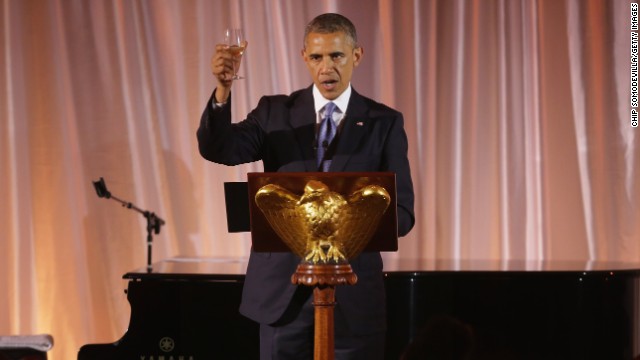
 An unprecedented summit of African leaders in Washington. An Ebola outbreak in West Africa that sparks global fears.
The two events this week
juxtaposed the best and worst of Africa at a time when its leaders want
to move, finally, past perceptions of a "dark continent" rife with war,
poverty and disease.
Those problems exist, as
demonstrated by the Ebola crisis threatening to spread beyond the
epicenter of neighbors Sierra Leone, Liberia and Guinea.
So does evidence of
galloping economies and prolonged political stability in countries
across Africa, a point emphasized repeatedly at the Washington gathering
hosted by America's first African-American president.
5 reasons Obama's Africa leaders' summit matters
Trade, not just aid
Leaders who once came seeking aid now make deals for trade, citing statistics to boost their case.
Six of the world's
fastest developing economies are in Africa. Burgeoning middle classes
offer growing markets for foreign goods.
To Senegalese President
Macky Sall, the summit "should allow us to confirm the change of
perspective towards a vision of Africa" from a continent that "used to
need aid."
He cited the evolving
perception chronicled by The Economist, which ran a May 2000 cover with a
picture of a gun-toting African above the phrase "the hopeless
continent." Eleven years later, the same magazine's cover heralded
"Africa rising."
President Barack Obama
emphasized the same point on Wednesday, declaring that "we are here to
take action -- concrete steps to build on Africa's progress and forge
the partnerships of equals that we seek."
He announced more money
for Africa, both aid and investment: $12 billion more for an existing
program to provide electricity in sub-Saharan Africa, and $14 billion
from companies including Coca-Cola, Marriott, General Electric and
Blackstone.
China ahead
African leaders told
Obama that the United States needed to catch up with other foreign
investors on their continent -- especially China.
For the past two
decades, Beijing has poured billions into Africa for roads, bridges,
mines and other development needed to extract natural resources sent
back home and elsewhere.
In some African
countries, governments and local communities have chafed at resulting
environmental harm and the use of imported Chinese labor instead of
local workers.
Obama got a dig in at China about that, telling his African visitors that the United States would be a responsible partner.
"We don't look to Africa
simply for its natural resources; we recognize Africa for its greatest
resource, which is its people and its talents and their potential," he
said Tuesday to applause. "We don't simply want to extract minerals from
the ground for our growth; we want to build genuine partnerships that
create jobs and opportunity for all our peoples and that unleash the
next era of African growth."
Overall, international trade and aid to Africa have increased in recent years after slowing due to the global recession.


No comments:
Post a Comment